What it is
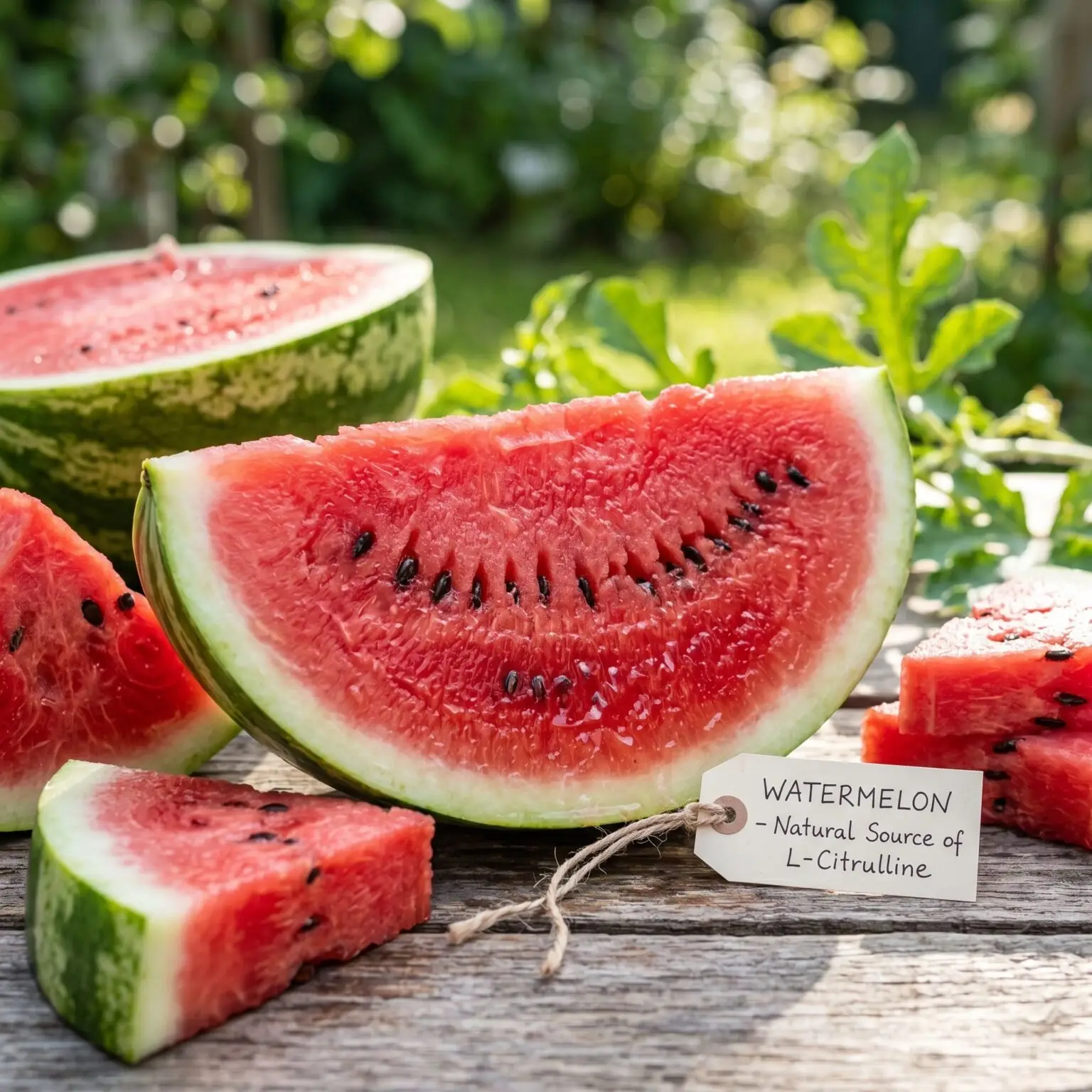
L-citrulline is an amino acid first identified in watermelon. The HCl form is citrulline bonded to hydrochloride for stability.
What it does in Memoclear
Citrulline does the one thing arginine cannot: it gets past the gut. It is not broken down by the same enzymes, so most of a dose reaches the blood, travels to the kidneys and is converted to arginine there. Trials show oral citrulline raises blood arginine more than oral arginine does. In Memoclear it is the recycling loop that keeps nitric oxide production going.
Where it comes from in food
Watermelon is the richest source, with smaller amounts in cucumber, pumpkin and other cucurbits.
What the research says
The citrulline-to-arginine route is well documented, including a 2016 trial in older adults showing a larger and longer rise in blood arginine from citrulline than from arginine. Blood-vessel studies show modest benefits. Direct memory trials in healthy adults are limited.
Who should be careful
Generally well tolerated. Because it raises arginine and nitric oxide, the blood-pressure, nitrate and erectile dysfunction medicine cautions apply.
Where it sits in the Memoclear formula
L-Citrulline HCl works alongside L-Arginine (base), L-Arginine AKG 2:1 Extract, L-Citrulline Malate, Beta-Alanine, Niacin (Vitamin B3), Calcium (as calcium carbonate). Together the seven cover nitric oxide, cell energy and nerve signalling in one daily capsule.
Further reading
Arginine after arginine or citrulline in older subjects, British Journal of Nutrition 2016. This research is on the ingredient, not on the finished Memoclear product.